
Nephrotic Syndrome

Protein leaks from damaged kidney filters, driving swelling and relapses — most common in young children.

What it is

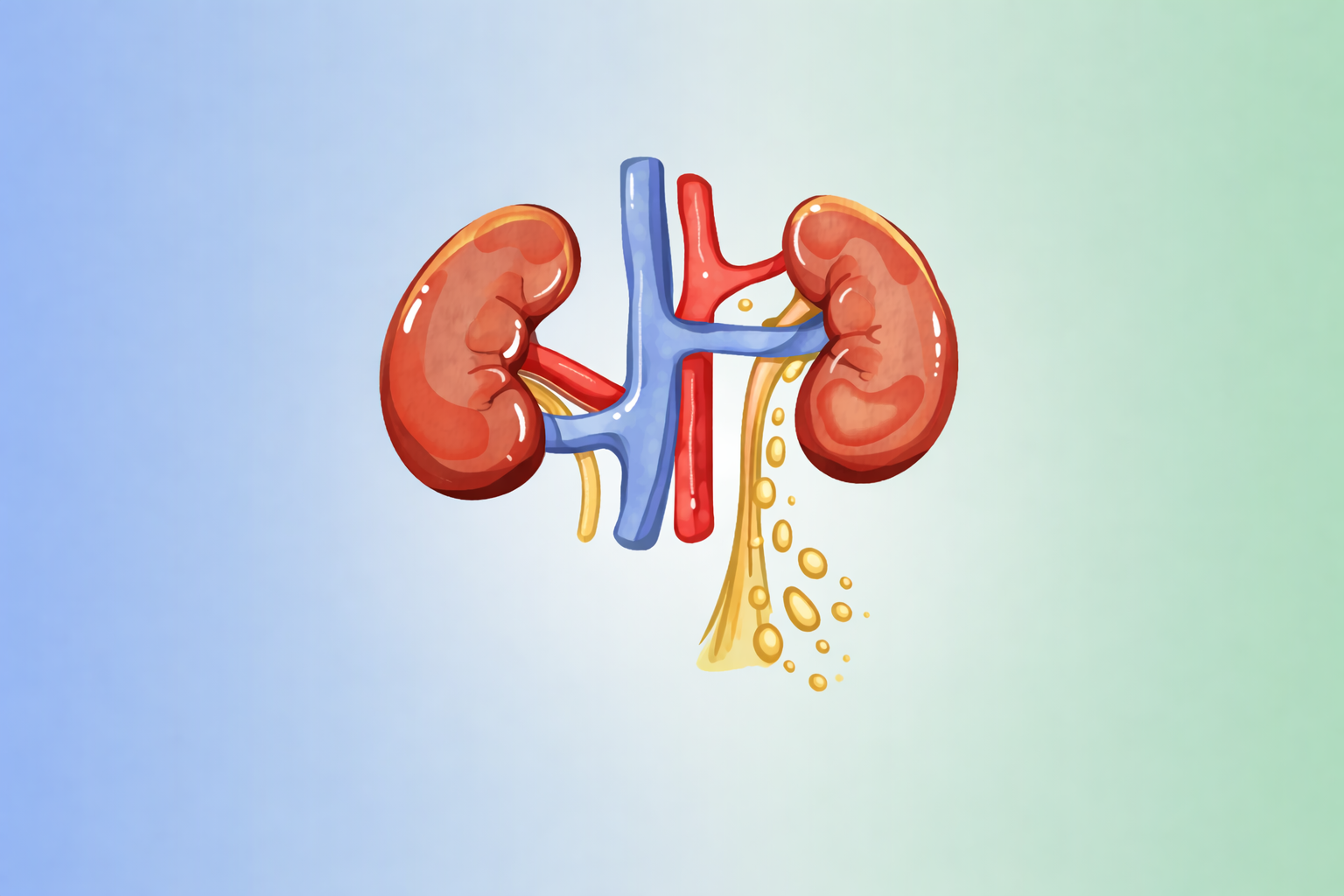
Damaged glomeruli (kidney filters) leak large amounts of protein into the urine. This lowers albumin in the blood, causes fluid to build up as swelling (edema), and raises cholesterol.

How common

About 2–7 new cases per 100,000 children each year. Minimal Change Disease is the most common cause and responds well to steroids.

Symptoms to watch

Puffy eyes (especially mornings), swollen ankles and belly, rapid weight gain, foamy urine, high blood pressure, fatigue, higher risk of infection and blood clots.

Diagnosis

Urine dipstick for protein, blood albumin (low) and cholesterol (high), kidney function tests. A biopsy may be considered if steroids don't work or the cause is unclear.

Treatment options

Steroids (prednisone) first-line, diuretics for fluid, ACE inhibitors or ARBs, low-sodium diet, and close monitoring. Other immunosuppressants if steroids aren't enough. Always doctor-guided.

Relapse monitoring

Relapses — protein returning to urine — are common. Families test urine with dipstick strips at home and watch for swelling, weight gain, and puffy eyes returning. Relapse signs guide →
Nephrotic Syndrome

Instagram Highlight

Tap through the stories we share with families about Nephrotic Syndrome.

Open highlight ↗

Frequently asked questions

What is the difference between nephrotic syndrome and nephritis?

Nephrotic syndrome mainly involves protein leakage, low albumin, and swelling — usually without blood in the urine. Nephritis involves blood in the urine, reduced kidney function, and high blood pressure. Some conditions cause both at the same time (nephritic-nephrotic overlap).

Will my child outgrow nephrotic syndrome?

Many children with Minimal Change Disease achieve long-term remission and relapse less as they get older. Some are effectively free of the condition by adolescence. The outlook depends on the underlying cause — your child's nephrologist can discuss their specific prognosis.

Is nephrotic syndrome the same as kidney failure?

No. Most children maintain good kidney function, especially with early treatment. Some forms — particularly FSGS — can affect kidney function over time, which is why regular follow-up matters even during remission.

Can nephrotic syndrome come back after remission?

Yes. Relapses are common, especially with Minimal Change Disease. Families are taught to test urine at home and contact their care team when protein reappears. Most children relapse less frequently as they get older.

When does my child need urgent care?

Seek care promptly for difficulty breathing, severe belly swelling, fever or signs of infection, chest pain, or sudden leg pain or swelling. Children with nephrotic syndrome have a higher risk of serious infections and blood clots — always follow your care team's specific guidance.