
IgA Nephropathy (Berger's Disease)

The most common form of glomerulonephritis worldwide — immune deposits inflame kidney filters, causing blood and protein in the urine.

What it is

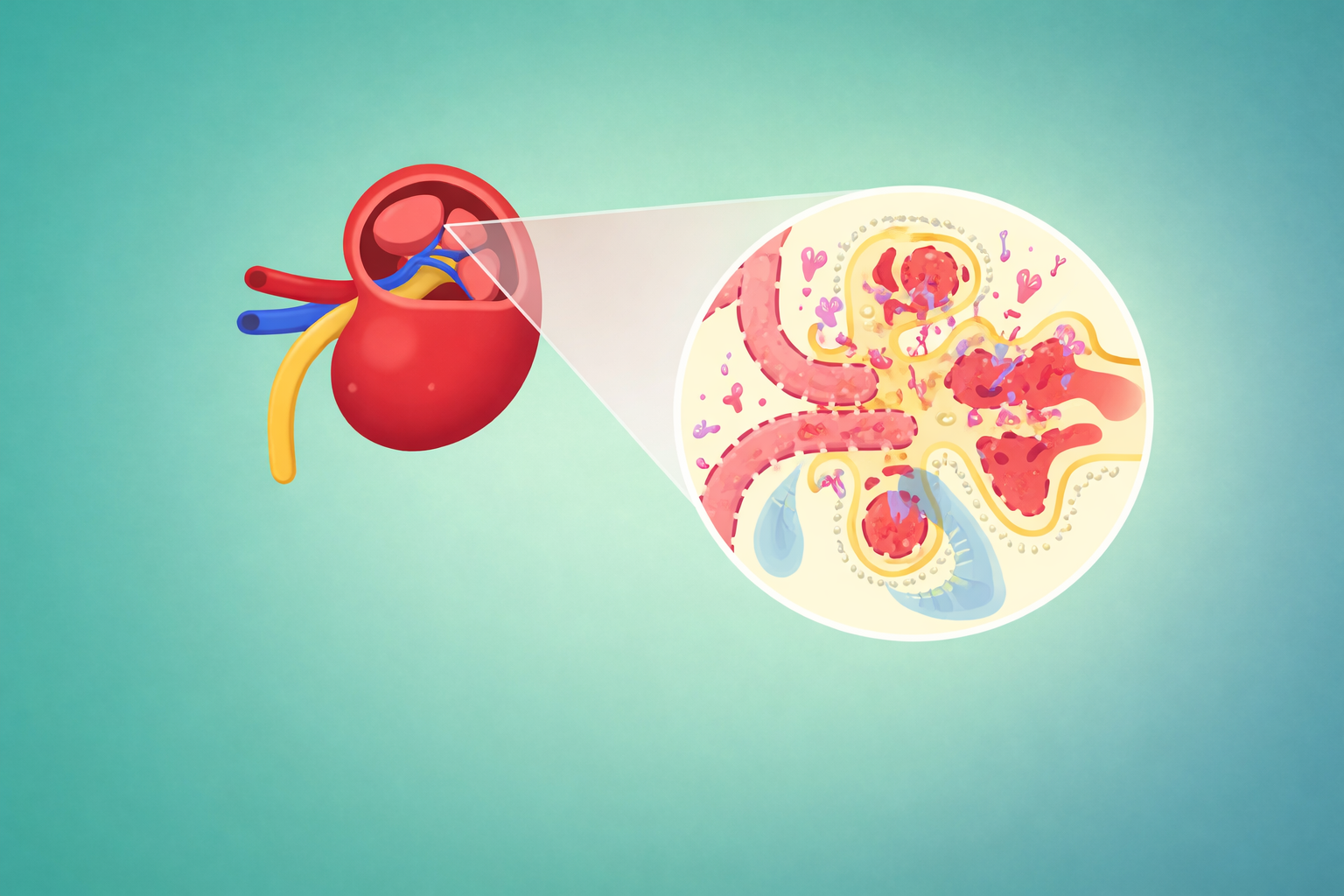
Abnormal IgA1 antibodies deposit in the mesangium — the supporting tissue between kidney filters — triggering inflammation that damages the glomeruli over time. It is the most common primary glomerulonephritis worldwide and often first appears in children and young adults.

The IgA connection

IgA is normally an antibody that guards mucous membranes. In IgA nephropathy, a poorly formed version (galactose-deficient IgA1) is produced in excess, recognized as foreign by other antibodies, and forms immune complexes that deposit in the kidneys — setting off an inflammatory cascade.

How common

About 0.5 new cases per 100,000 U.S. children per year. It is significantly more prevalent in East Asian and Pacific Islander populations. Often diagnosed in the second and third decades of life, but it can present in childhood.

Symptoms to watch

Cola- or tea-colored urine (gross hematuria) 1–2 days after a cold or vigorous exercise is the classic sign. Microscopic hematuria found on a routine urine test is another common presentation. Some children also have protein in urine, high blood pressure, or flank pain.

Diagnosis

A kidney biopsy is the only way to confirm the diagnosis — it shows IgA deposits in the mesangium on immunofluorescence staining. Biopsies are not always done immediately; children with only microscopic hematuria and normal kidney function may be monitored first. Blood tests and urine protein measurements guide the decision.

Treatment options

ACE inhibitors or ARBs are first-line to control blood pressure and reduce proteinuria. Corticosteroids are added for children with significant protein loss. Newer targeted therapies — budesonide (Tarpeyo) and sparsentan (Filspari) — are now FDA-approved. SGLT2 inhibitors provide additional kidney protection. Low-sodium diet and monitoring are part of ongoing care.
IgA Nephropathy

Instagram Highlight

Tap through the stories we share with families about IgA Nephropathy.

Open highlight ↗

Frequently asked questions

Why does IgA nephropathy cause blood in urine after a cold?

When the immune system ramps up to fight a throat or respiratory infection, it produces more IgA antibodies — including the abnormal IgA1 that deposits in the kidneys. This surge of IgA temporarily increases inflammation in the glomeruli, causing blood to leak into the urine. The timing — blood in urine 1–2 days into an illness — is a hallmark of IgA nephropathy and distinguishes it from other causes of hematuria.

What's the difference between IgA nephropathy and HSPN?

Both involve IgA deposits in the kidneys and can look identical on biopsy. The difference is that IgA vasculitis (HSPN) is a systemic disease — the same IgA deposits appear in blood vessels throughout the body, causing a purpura rash, joint pain, and abdominal cramping in addition to kidney involvement. IgA nephropathy affects the kidneys alone.

Are there new treatments for IgA nephropathy?

Yes — this is one of the most actively researched areas in nephrology. Targeted-release budesonide (Tarpeyo) was FDA-approved in 2021 to reduce proteinuria. Sparsentan (Filspari) was approved in 2023. SGLT2 inhibitors are increasingly added for kidney protection. Several other therapies targeting the IgA pathway are in late-stage clinical trials.

Will my child's IgA nephropathy lead to kidney failure?

Not necessarily. Children generally have a better long-term outlook than adults. The most important risk factors for progression are persistent high blood pressure, significant protein in the urine, and reduced kidney function at diagnosis. Treating these aggressively — with ACE inhibitors, tight blood pressure control, and newer therapies — can slow or halt progression significantly.

Does my child need a biopsy right away?

Not always. A child with only microscopic hematuria, normal blood pressure, no protein in urine, and normal kidney function is often monitored without an immediate biopsy. A biopsy becomes more important when there is significant proteinuria, impaired kidney function, or the diagnosis is uncertain — as it guides treatment decisions and gives prognostic information.