 nephraware
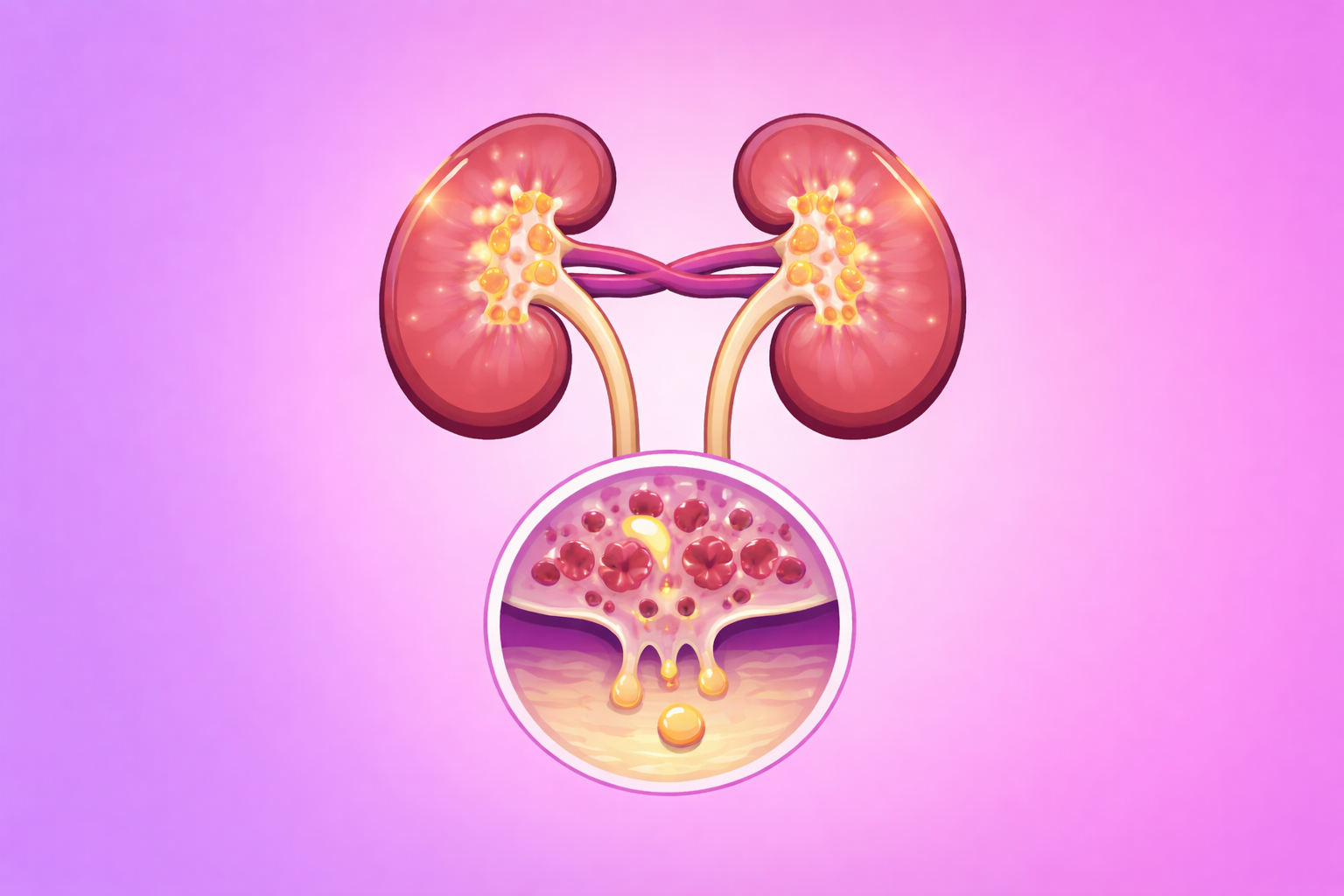
Minimal Change Disease
The most common cause of nephrotic syndrome in children — kidney filters leak protein despite looking nearly normal under a regular microscope.
What it is
The glomeruli (kidney filters) become leaky and allow large amounts of protein — especially albumin — to spill into the urine. Low albumin in the blood then draws fluid into the tissues, causing swelling. MCD is the underlying cause in about 80% of children with nephrotic syndrome.
Why "Minimal Change"?
Under a standard light microscope, kidney tissue looks almost normal. The damage — flattening of tiny foot-like projections on filter cells (podocyte foot process effacement) — is only visible under an electron microscope. That's the "minimal change" the name refers to.
How common
About 2–7 new cases per 100,000 children each year. It's most common between ages 2 and 6, more often in boys than girls in young children. It can also occur in adults, though less commonly.
Symptoms to watch
Puffy eyes (especially mornings), swollen ankles, belly, or hands, rapid weight gain from fluid, foamy urine, high blood pressure, fatigue, and higher risk of infection. Symptoms can appear suddenly over a few days.
Treatment options
Corticosteroids (prednisone or prednisolone) are first-line — 80–90% of children respond within 4–8 weeks. Diuretics and a low-sodium diet help manage swelling. If relapses are frequent or steroids cause side effects, steroid-sparing medicines (cyclosporine, tacrolimus, mycophenolate) may be added.
Steroid response & relapses
MCD typically responds well to steroids — this is one of its distinguishing features. However, relapses are common, affecting roughly 60–70% of children after their first remission. Families monitor protein at home with urine dipsticks. Relapse signs guide →
Instagram Highlight
Tap through the stories we share with families about Minimal Change Disease.
Open highlight ↗